
Buli Andya, Komanyoko, Komanina
DISCLAIMER: EVERYTHING YOU ARE ABOUT TO READ IS A WORK OF FICTION AND NO ONE WAS HURT.
It was a birthday. And as playful as children can be, it quickly became a bath day for one—Nambi.
Nambi was built strong, always smiling, incapable of hiding her emotions. Her face was a mirror—one glance, and you knew exactly how she felt.
She was the life of the party. Music had a power over her body; the moment she heard a beat she liked, she would move. Everyone liked her.
Even those who envied her voluptuous body, the one she never hesitated to flaunt, couldn’t deny her charm.
And just like a dream—you never really know how some things begin.
I found myself in a familiar place. It looked like where I had grown up. I had no idea how Nambi, or the others I’d met over the years abroad, were here with me.
Perhaps we had grown closer. Perhaps I had finally become open enough to let them into my past.
For the bath day, big basins were to be used. The rules were simple: the birthday celebrant had to be chased down as water was poured onto them.
It could get rough—physical—but for the most part, it was fun. It seemed consensual. The drenched victim would laugh, roll, run, scream.
But we could never be sure. Perhaps they agreed simply due to peer pressure.
I had never been fond of the place I grew up in.
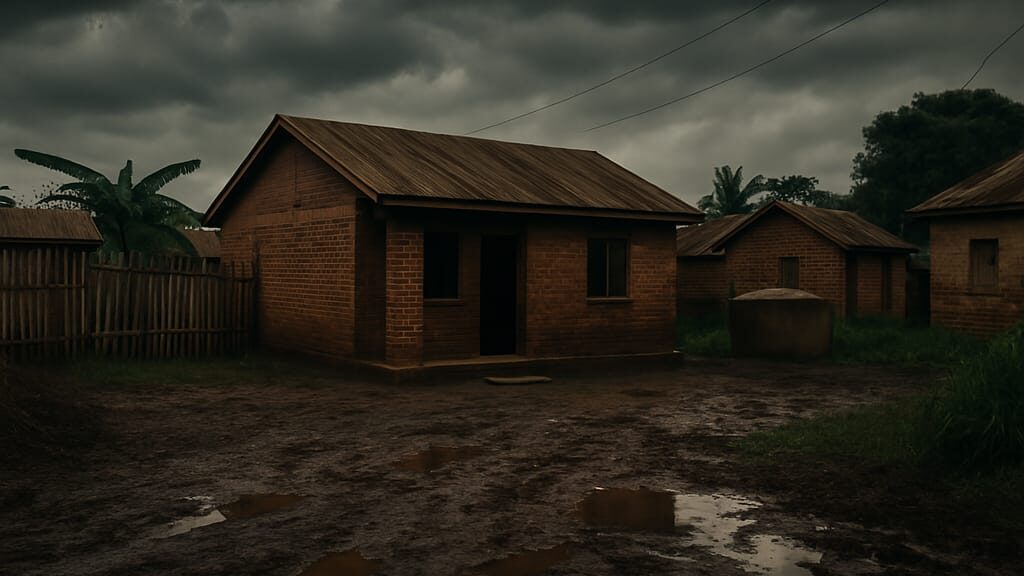
From the outside, our house looked big compared to the others in the neighborhood. But to me, it was all an illusion. A master bedroom.
A second room I shared with my brother and cousin. A bathroom that had never known the feel of water—its construction had never been completed, and so it became a storage space.
A corridor connected the rooms to the kitchen, or rather, the place where food was cooked.
Cemented floors. Dirty walls.
The living room walls were repainted now and then—for appearances. For visitors. To create the illusion that things weren’t so bad.
The bathroom, however, had the filthiest walls, blackened by the charcoal my mother used for cooking.
And then there was the rental house attached to ours. A twin of my home, but somehow better.
When renovations were made, they were made there first. Probably to increase the rent.
I liked that house more than my own. I befriended every new tenant, always eager to be let inside. Their walls were cleaner. Their decorations better.
“They say comparison is the thief of joy,” but I didn’t know that back then.
One day, my father complained that I was never satisfied with what I had. I never understood where he had uprooted such an accusation.
And so, I continued to admire the things I lacked. I promised myself: My father has loved me and given much to raise me. But I will never hate my children enough to have them when I am still a poor man.
The compound was muddy, about fifteen feet in size if you measured from the veranda I despised cleaning.
In front of the house, an abandoned plot—owner unknown. My mother once grew maize and beans there, but later, the supposed owner’s son began using it to make bricks. The view from our doorway became even uglier.
I never invited friends over. I was afraid of their judgment.
To the right of our house, our neighbors. My parents had nothing good to say about them, and it was clear the feeling was mutual.
Yet, they pretended to get along. The neighbors owned the pathway that cut through our compound. I hated that.
Further down, a smaller house stood. Always flooded during the rains. Water had carved a path through it, flowing toward a nearby swamp.
In front of it, a small garden of maize. An avocado tree. And a septic tank belonging to another neighbor.
It was there—between the small house with poor drainage and the one beside it—that Nambi was restrained.
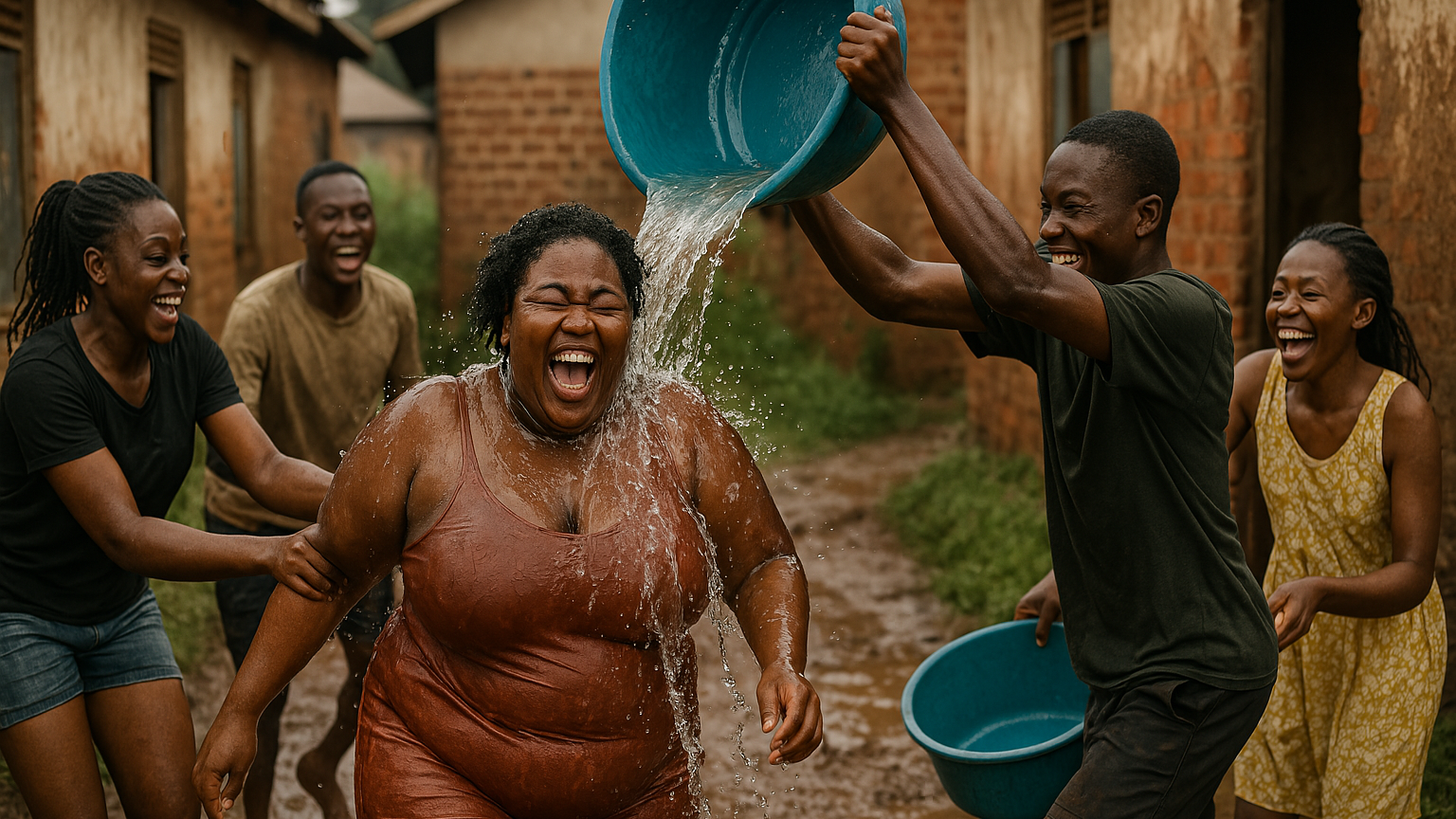
She fought. Friends held her arms, laughing. Her best friend, Kaze, led the charge, filling basins with rainwater.
He tossed them to Kaye, who caught them effortlessly. Wet hands. Slippery skin. Nambi twisted free and ran.
Others chased her, struggling with heavy basins sloshing with water. Kaye, desperate to stop her, did something stupid.
He threw a stone.
I watched from the side, dry, uninvolved. A stupid idea, I thought, but I said nothing. Adrenaline coursed through me, making my heart pound.
Maybe because I had always had a weak chest. Maybe because I had been a sickly child. Maybe because I somehow knew what was coming.
Kaye missed. Missed again.
Kaye missed with each throw—and for his sake, and hers, I prayed he would keep missing.
But like most of the prayers I make with all my heart, it didn’t work.
Nambi was hit.
She had just passed the septic tank when it struck her.
She fell, her head hitting the concrete with a sound I’ll never forget.
It should have been severe.
No—it was severe.
I could tell from the terror painted on the faces of the friends who’d been chasing her only seconds ago.
I could tell it was deadly—because I had never heard a human make the sounds she made.
She was in pain.
And I hate this about myself—
I feel other people’s pain deeply. Maybe even more than they do.
It’s the reason I defied my father when he wanted me to become a doctor.
I hoped one of my siblings would carry that burden instead, make him a proud man.
But not me.
Never me.
As I stood there, frozen, something crawled from the inside of my chest—something sharp, something alive.
It clawed at my skin like it wanted out.
My eyes burned red—like I’d taken a hit of marijuana or been crying for hours.
I was terrified.
And instantly, I felt responsible.
How had I let this happen?
I hadn’t said a word the whole time.
I stood at the side, high on the adrenaline, watching my friends act like maniacs.
Then—from where I stood—I heard her.
Cursing.
Loud.
In Luganda.
“Buli anzina Komanyoko Komanina.”
There’s no perfect translation.
But she was furious—at everyone who had recently been intimate with her.
It didn’t match the moment.
It made no sense.
And that terrified me even more.
Was she losing her mind?
Had she already lost it?
Being one of those people, I was drawn in.
Her words weren’t just curses—they were bait, and I bit.
I rushed toward her, face tight with confusion and fear.
Our eyes locked.
Her scream cut the air.
Louder this time.
She shouted at me—begged me not to come closer.
But the curses kept coming, raw and unfiltered.
And before I could stop myself, it happened.
A force—cold and unnatural—rushed through me.
It yanked my lower body into the air.
My hands gripped a dry maize stem in the mud below.
All I could think was:
I’m a dead man if I let go.
I was being pulled to her.
And I knew it.
She knew it too—her eyes screamed it.
As I struggled to stay grounded, she struggled to escape me.
The closer I got, the stronger the pull.
But as the distance between us grew, the force weakened—like a winter wind dying out.
I’ve always said I’m not afraid of death.
But in that moment, I knew I had lied to myself for most of my life.
I had never been more afraid.
I screamed.
So loud, I couldn’t even hear myself anymore.
And even after my feet found the earth again, it took minutes for my body to stop shaking.
She was still yelling—words I couldn’t understand.
Instructions, maybe. Spells. Prayers.
Something to undo what had been done.
Something to save me.
Because whatever had happened…
It was meant for someone who had been in the warmth of her thighs.
I tried to listen—
But not a single word landed.
And I knew, with every fiber of my being, that my pathetic life depended on it.
And then—
Just like that—
Like the abrupt end of a dream…
I snapped back to reality.
-
The shift from playful nostalgia to unsettling horror was seamless and chilling. I felt like I was right there, watching everything unfold. This is great.
The shift from playful nostalgia to unsettling horror was seamless and chilling. I felt like I was right there, watching everything unfold. This is great.